Find the actual bottleneck
Review page weight, scripts, images, server response and third-party tools. Prioritise the causes with the most useful impact instead of chasing a single test score.
A slow website can frustrate people before they have read your offer. Core Web Vitals describe parts of the real visitor experience: how quickly the main content appears, how promptly the page responds and whether the layout shifts unexpectedly.
Request a project quote ↗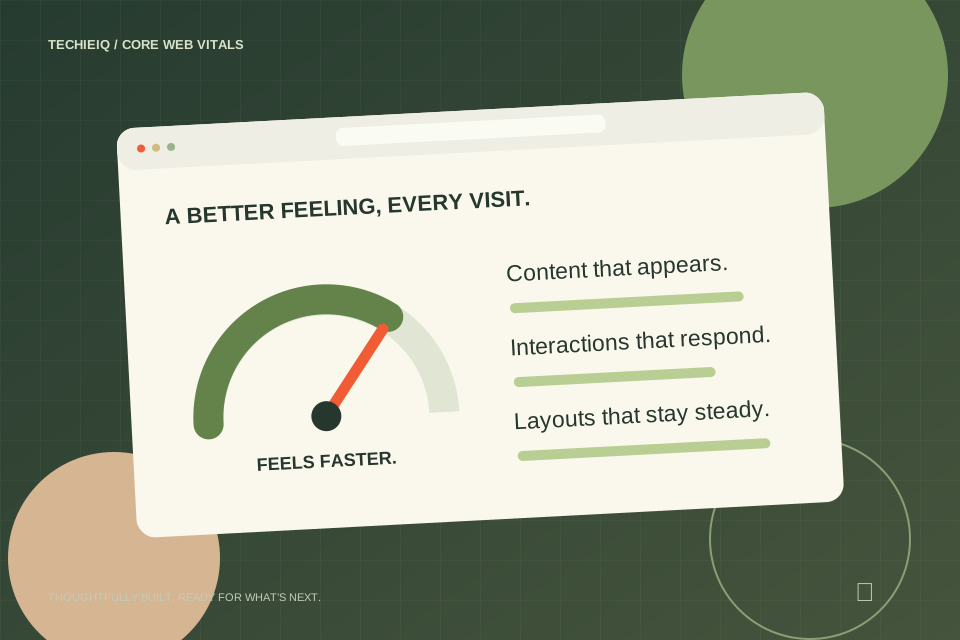
For businesses with slow pages, poor mobile experiences, failed performance assessments or a WooCommerce store that feels sluggish.
Review page weight, scripts, images, server response and third-party tools. Prioritise the causes with the most useful impact instead of chasing a single test score.
Work on relevant issues such as oversized images, blocking assets, fonts, caching and expensive interactions. The right changes depend on your site.
Compare appropriate before-and-after tests and explain remaining limitations. Real-user measurements can take time to reflect recent changes.
Performance work connected to how people use the website. These are the situations we discuss with you before recommending a scope.
Large images, slow server responses and unnecessary scripts can delay the content people came to see. A page that seems acceptable on office Wi-Fi may feel different on a mobile connection.
We establish a baseline on representative pages and investigate image delivery, fonts, caching, server response and relevant scripts. Recommendations address observed bottlenecks instead of assuming one optimisation plugin will solve everything.
Visitors can lose their place when content moves, or wonder whether a click worked while the browser is busy. Image sizing, injected content and heavy scripts can all affect the experience.
We review layout stability and interaction behaviour in agreed journeys. Improvements can include reserving space for content, reducing avoidable script work and changing asset delivery while preserving required features.
Removing or delaying scripts can affect forms, product options, checkout or measurement tools. Optimisation stops being useful when it ignores the business reason a feature exists.
We agree which functions must be preserved and check them after relevant changes. Measurements are interpreted alongside the customer journey, with constraints from hosting and third-party tools explained.
A performance review starts with representative URLs and an understanding of the website. Service pages, product pages and checkout may have different constraints. We review behaviour, hosting and important dependencies, then identify changes relevant to loading, responsiveness and layout stability. The baseline gives the work a measurable starting point.
The plan separates site changes from recommendations requiring the host or another provider. Work can include preparing images, reviewing fonts, adjusting appropriate caching and examining scripts or page components. WordPress assessments also consider themes, page builders and extensions. Dynamic pages and customer-specific information need particular care when discussing cache behaviour.
After implementation, we repeat the agreed measurements and check important workflows. Lab tests help compare changes; real-user data reflects different devices and networks and may update over time. We explain the results and remaining constraints without presenting a single score as a guarantee of every visit or a Google ranking.
Discuss this work with TechieIQ ↗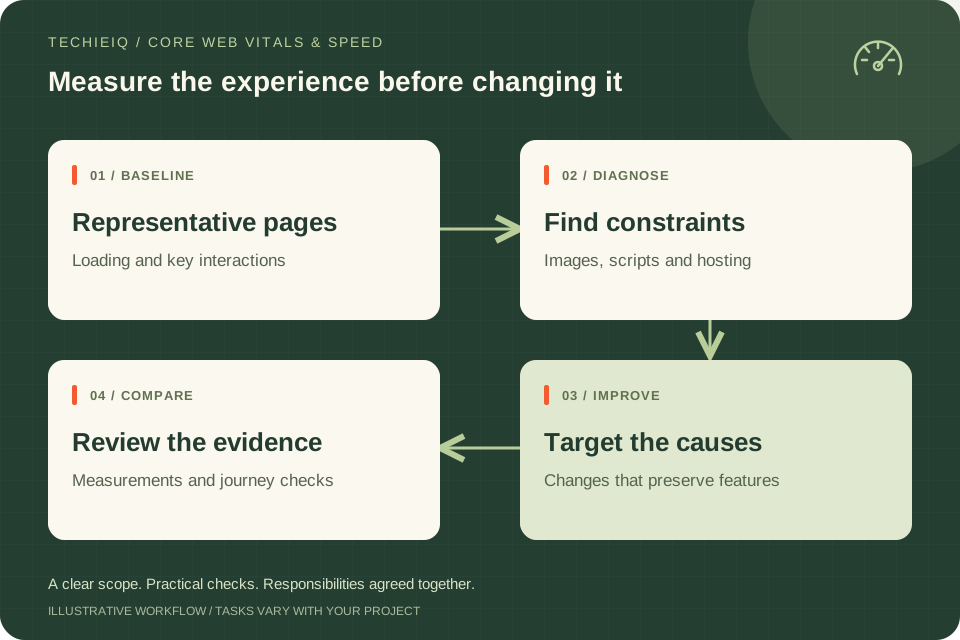
Here is how we apply the relevant technical work to your project. Ask us to walk through the approach and discuss examples that can be shared during your consultation.
We look at the relationship between server response, page structure, asset delivery and browser work. This helps distinguish an oversized image from a slow application response or heavy external script. Recommendations are prioritised around the representative pages and actual constraints.
The technical review can cover themes, extensions, images, fonts, scripts and caching. Changes must respect forms, stores and other dynamic workflows. Compatibility and provider restrictions are discussed before applying settings that could change the way visitors interact with the website.
We compare agreed measurements before and after changes and explain where further gains depend on a business decision. A third-party feature may be useful despite its performance cost. You can decide whether changing functionality, hosting or an external service justifies additional work.
We agree review points before implementation, so you can understand what the work covers and how it will be handed over. These are typical items we discuss when preparing your proposal.
A performance score, Core Web Vitals result or search ranking is not guaranteed. Hosting upgrades, paid tools, major rebuilds and changes controlled by third parties are separately scoped when needed.
These are the typical areas we discuss for this service. Your written proposal confirms exactly what is included, the milestones and the cost. Third-party subscriptions, licences and services are identified separately.
Ask about this service on WhatsApp ↗Review the affected pages and establish a measurement baseline.
Agree the highest-priority fixes and any functional trade-offs.
Implement changes and check the important user journeys.
Compare results and document remaining dependencies.
Share the pages that feel slow, relevant test reports and the devices or locations where issues occur. Tell us which third-party features are essential to the business.
A homepage, a service page and a product page can have different bottlenecks. We select pages that represent real customer journeys and establish a baseline before changing the site. We also ask which functions matter most, because removing a business-critical tool to improve a score is a decision that needs your input.
A test score is one useful signal, but visitors experience the entire journey. Optimisation work should preserve navigation, forms, product options and checkout. After changes, we compare relevant measurements and check the agreed workflows. We explain any remaining limits caused by the hosting environment or external scripts so you can make an informed decision about further work.
Choose the tools for the outcome you need. We review your existing setup and explain compatibility, access and support responsibilities before work begins.
Business websites, content publishing and online stores.
Custom functionality, databases and business workflows.
Responsive interfaces, accessible pages and customer journeys.
Framework, dependency and deployment review before an agreed development or care scope.
We work digitally with businesses across India and worldwide. Tell us what you need, and we will explain the next step.
LCP concerns when the largest main content becomes visible. INP concerns interaction responsiveness. CLS concerns unexpected movement in the page layout. Together they help describe the visitor experience.
We do not guarantee a particular score or search ranking. Hosting, content, device conditions and third-party features can affect results.
A lab test uses a defined simulated environment. Field reports reflect actual visits across devices and conditions, and often summarise a rolling period rather than the latest deployment alone.
Tell us whether you need a new website, a repair, an online store or ongoing maintenance. Share your current website address if you have one. We will review your request and contact you to discuss the scope.
◉ Chat on WhatsApp ↗[email protected]Online consultations · India & international projects