Reduce repetitive work
Replace repeated spreadsheet copying, disconnected forms or manual handovers with an agreed digital workflow. We identify the inputs, rules and outputs before building.
When your business process does not fit a standard theme or plugin, custom development can close the gap. We turn a defined problem into a web-based tool, with attention to permissions, data handling and the way your team actually works.
Request a project quote ↗
For businesses needing a customer portal, internal dashboard, booking workflow, tailored form, API integration or improvements to an existing application.
Replace repeated spreadsheet copying, disconnected forms or manual handovers with an agreed digital workflow. We identify the inputs, rules and outputs before building.
Integrate supported third-party APIs, payment services or business tools. Access permissions, provider limitations and recurring API costs are reviewed during scoping.
If a developer has left or a project is unfinished, we can review the codebase, document its condition and propose a realistic repair or completion plan.
Software shaped around the way your business works. These are the situations we discuss with you before recommending a scope.
Staff copy information between spreadsheets, emails and separate systems. As activity grows, duplicate records and missed steps become harder to spot, while customers wait for information that already exists somewhere in the business.
We map the workflow, identify the decisions people make and agree which steps should be automated. Portals, dashboards and custom applications are designed around actual users, data and exceptions.
An enquiry or order arrives in one tool while the next team works in another. Integrations become fragile when field mappings, failure handling and record ownership have never been documented.
We review the available APIs and permissions, define the source of truth and plan how records move. Representative success and failure cases are included in the agreed integration scope.
An application may contain undocumented assumptions, tightly connected modules and a release process known to one person. Adding features without understanding this structure can make future work more expensive.
We review the relevant code, dependencies and environment before proposing staged repairs or development. Documentation and release responsibilities are part of the handover; a larger rebuild is identified separately.
Discovery starts with specific questions: who uses the system, what do they enter, what may they see and which decisions happen next? We turn the answers into a written view of workflows, roles, data and integrations. This lets you challenge assumptions and decide which features belong in the first release before development begins.
Implementation is organised around agreed capabilities. Screens, validation rules, permissions, record ownership and integration behaviour are defined together. Where an external API or dependency creates uncertainty, we investigate it early and explain the limitations. Progress is reviewed against the workflows you approved, with changes to the scope discussed explicitly.
Before release, we check representative user journeys and relevant failure cases. The handover explains environment requirements, deployment, access ownership and known limitations. We also discuss support and future improvements, so the first release can evolve without leaving the business dependent on undocumented knowledge.
Discuss this work with TechieIQ ↗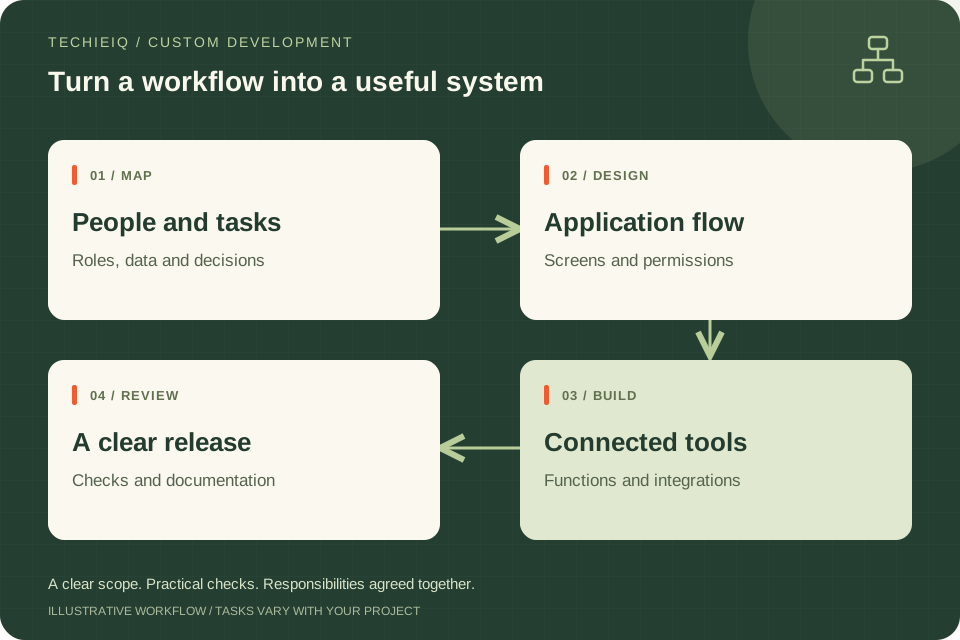
Here is how we apply the relevant technical work to your project. Ask us to walk through the approach and discuss examples that can be shared during your consultation.
We translate business tasks into screens, data relationships and responsibilities. This includes who can create, view, edit or approve information and what happens when a task cannot proceed. Automation should simplify work while keeping important business decisions understandable to the people responsible for them.
Our technical focus includes PHP and MySQL functionality, web interfaces and supported API connections. We review validation, permissions and error handling within scope. Payment services, customer systems and specialist providers are assessed individually because account access, supported features and limits differ.
We pay attention to dependencies, configuration, source access and how changes reach the live environment. In inherited projects, urgent repairs are separated from structural improvements. The handover records the information a future developer or support person needs to maintain the agreed functionality.
We agree review points before implementation, so you can understand what the work covers and how it will be handed over. These are typical items we discuss when preparing your proposal.
Custom development needs defined features and acceptance criteria. Specialist compliance assessments, independent security audits, large-scale load tests and additional integrations are separate deliverables unless explicitly included.
These are the typical areas we discuss for this service. Your written proposal confirms exactly what is included, the milestones and the cost. Third-party subscriptions, licences and services are identified separately.
Ask about this service on WhatsApp ↗Map the workflow, users, data and business rules.
Agree a technical approach, scope and acceptance criteria.
Develop in milestones so you can review working functionality.
Test the agreed workflows, deploy and document operation.
Bring examples of the process you want to improve, user roles, existing tools and any API documentation. For inherited projects, provide a code repository and deployment information through an agreed secure channel.
A useful application begins with specific questions: who signs in, what each person can see, what information is entered, and what happens when something goes wrong? We map these decisions before implementation. The result is an agreed set of workflows and acceptance criteria that you can review without needing to understand the underlying code.
An application also needs deployment information, dependency updates and a way to investigate problems. We discuss where it will run, who owns external accounts and how future changes will be made. For sensitive information or regulated workflows, the relevant security and compliance requirements need to be identified during scoping rather than added as an assumption at the end.
Choose the tools for the outcome you need. We review your existing setup and explain compatibility, access and support responsibilities before work begins.
Business websites, content publishing and online stores.
Custom functionality, databases and business workflows.
Responsive interfaces, accessible pages and customer journeys.
Framework, dependency and deployment review before an agreed development or care scope.
We work digitally with businesses across India and worldwide. Tell us what you need, and we will explain the next step.
We can assess it first. Some codebases can be repaired economically; others need a partial rebuild. We explain the findings before you commit to implementation.
Ownership, third-party licences, repository access and handover deliverables are specified in your project agreement. Raise any requirements before development begins.
Yes. New features can be scoped as later phases. We establish priorities so the first version solves a useful, bounded business problem.
Tell us whether you need a new website, a repair, an online store or ongoing maintenance. Share your current website address if you have one. We will review your request and contact you to discuss the scope.
◉ Chat on WhatsApp ↗[email protected]Online consultations · India & international projects